
A cracked bat is not a broken bat. Most cracks are surface deep, most bats keep performing with them, and plenty of bats play out their whole life marked up. What matters is not whether there is a crack, it is what caused it and whether the bat is still sound. This page tells you where that line sits so you never have to guess, and so you know exactly what we will do.
Your bat is built to score

Everything we do in the workshop is aimed at one part of the bat. The middle, in from the edges and up from the toe. That is where the performance lives, where the willow is thickest and best supported, and where the bat is engineered to take the ball.
The edges and the toe take plenty of impact too, and they are built to. But they are not what the bat is designed around. They are thinner, less supported, and further from the spine of the blade. Hit them often enough and they will break down sooner than the middle will.
That is not a flaw. It is the trade you make for a bat with a big middle and a light pickup.
We are all cricketers here
Everyone at Cooper plays. We have all broken bats. We know exactly what it feels like to have a good one go in the first month of the season, and we are not going to pretend that is a small thing.
We also know the honest maths. A bat is a consumable. Use it more and it breaks down faster. Use it less and it lasts longer. Two players can buy the same bat on the same day and one will still be using it in three seasons while the other has retired it by Christmas, and neither bat was better or worse than the other.
The game has changed, and bats changed with it. Bats today are bigger, lighter and more powerful than anything from the seventies, eighties or nineties, and they score more freely than those bats ever did. That performance is bought with thinner edges, a flatter face and less timber holding it all together. A modern bat is a high performance tool. It is not the fence post your coach used.
At the same time T20 rewired how everyone bats, right down to juniors. Fast scoring from ball one, more risk, more swinging, more boundary hitting. Great when it comes off. When it does not, the ball finds the toe and the edges, which is exactly where a modern bat is thinnest. More adventurous batting means more mishits, and more mishits means more damage, on any brand of bat.
Net ready, not match ready
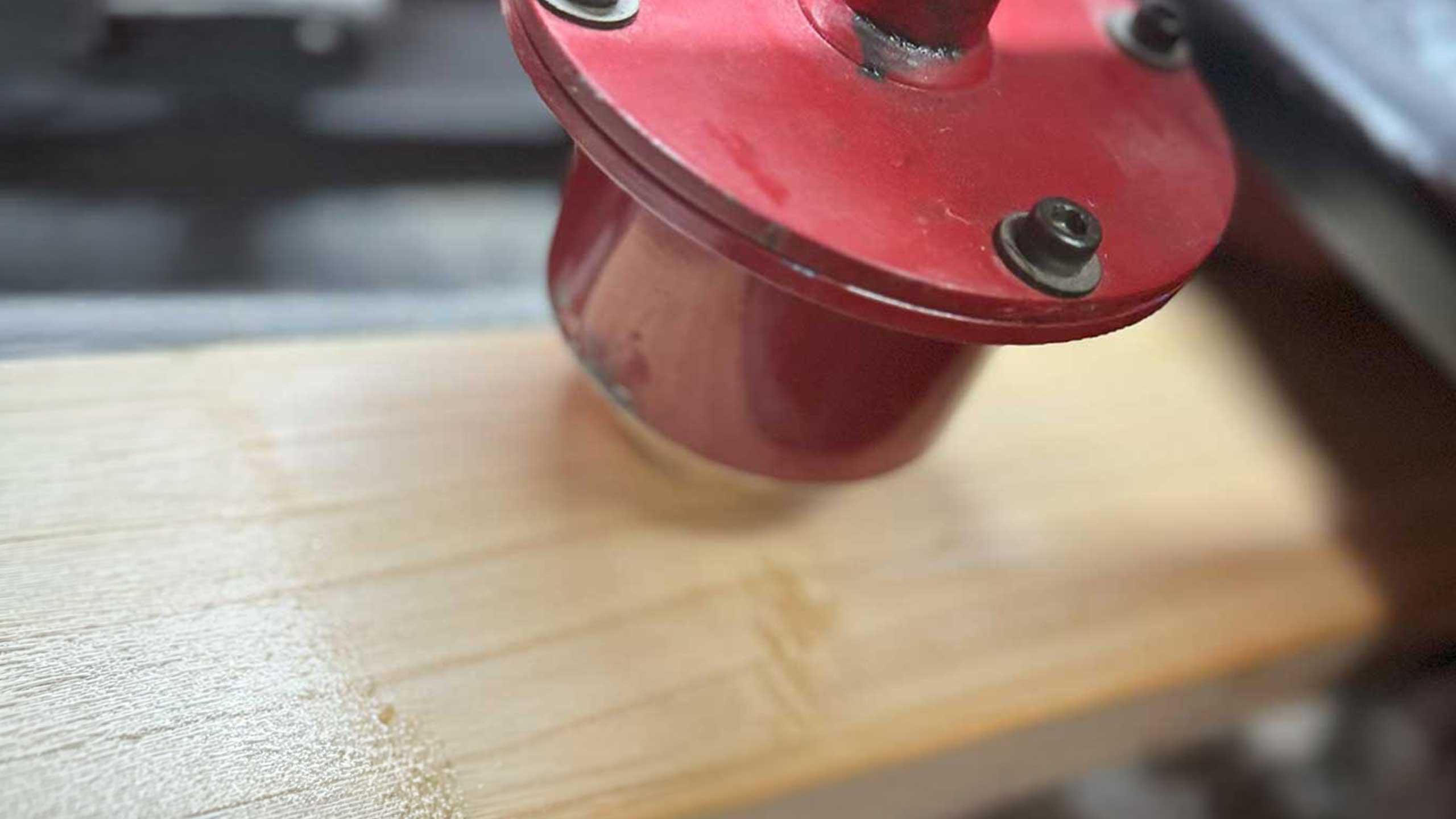
Every Cooper bat is hand knocked before it leaves us. Pressed in manufacture, oiled, then worked by hand with a heavy mallet, with real attention to the edges and toe.
There is no magic number of knocks and we do not claim one. Willow varies from cleft to cleft, so no two bats need the same amount of work, and past a point more work damages the face instead of improving it. Hands feel when a bat has had enough. A machine cannot.
Face protection of your choice and a hard toe are fitted before you get it, both included in the price. You are not paying extra to protect something you just bought.
Your bat is ready for the nets the day you get it. It is not ready for a match, and no new bat is.
Get to know it against older balls first. Most bats take two to five weeks of play before they really start opening up, and how fast that happens varies with the grade.
What we cover
Twelve months from the day you buy it, against genuine manufacturing faults. You can double that to twenty four months with the extended warranty at $199. Same cover, same rules. Your rights under the Australian Consumer Law sit alongside it either way and, on an expensive bat, can run longer than 12 months regardless.
That includes a fault in the willow we could not have seen when we made it, and a horizontal crack running from the base of the splice.
What we will do. We repair it, free, inside the warranty period. Repair is almost always the right answer on a hand made bat, and we are the people who made it, so we are the people best placed to put it right. If a fault is genuinely beyond repair we will replace the bat, refund it, or give you store credit.
If we find the damage was caused by misuse rather than a fault, normal repair charges apply. We will always tell you what we have found and what it will cost before we do anything.
What is not covered
Almost every bat that comes back to us is impact damage, not a fault. There is a reason for every break, and we can nearly always tell you what it was.
Impact damage to the edges and toe
Yorkers into the toe, edges taken on the shoulder or at the very end of the blade, mistimed shots. That is cricket, not a fault in the bat.
If an edge or toe failed because of something we did wrong in making the bat, that is a different thing and it is covered. The question is always what caused it, not where it is.
Surface cracks and marks
Willow is a soft natural timber. Face cracking and small dents are what a used bat looks like.
Ball quality, which we cannot control
Cheap, over hard, composite or plastic injected balls are harder on willow than anything you will face in a match. So is a ball that has been soaked.
Bowling machine use
Not because a machine ball is harder, it usually is not, but because of volume and repetition. A feeder delivers a ball every seven to eleven seconds, which is three to five hundred an hour with no run ups and no one getting tired, and the dimples exist specifically so it lands in the same place every time. That is a lot of impacts concentrated on one part of the blade. Handles and shoulders are what tend to go.
Storage and the elements
It is still timber. Left somewhere damp, in a wet bag, in a car boot in summer, or next to a heater over winter, it will move and break down, the same way any good piece of timber furniture does if you leave it outside. Dewy outfields and wet synthetic surfaces are the same problem in a shorter dose.
A bat worked on by someone else
Once another workshop has repaired or refinished a Cooper bat we cannot warrant what is under the finish, so the Cooper warranty no longer applies. Bring it to us first and we will tell you honestly what it needs.
A bat we build without Cooper stickers
If you ask for a new bat with no branding, that bat is sold without a Cooper warranty and we tell you at the time. It is not cover taken away later, it is cover we do not give on a bat we cannot identify as ours.
Why bats break, and what each one means
Why is the toe the most common failure?
The toe is the thinnest part of the bat and it was never meant to strike the ball. A yorker, or a ball dug into the ground, drives straight into the end grain. Add any moisture the toe has picked up off a wet pitch and the timber is already softer than it should be. Toe damage is almost always impact, and the exception is a fault in the making. We fit a hard toe to every bat we make to keep moisture to a minimum and help with general wear and tear, but that does not make the toe indestructible.
What causes a crack at the toe?
Direct impact into the end of the blade, usually a yorker or a ball hit into the ground. The fibres run the length of the bat, so a hit straight into the end of the bat may split along their length rather than bruising the way a face impact does.
What is a shoulder split running down from the handle?
The shoulder is where the handle enters the blade, and it is the most highly stressed joint in the bat. Every ball you hit twists and loads that joint. Edges taken low on the blade load it hardest of all, because that impact makes the bat twist and vibrate. Repeated over a season, that stress can open a split down from the joint of the handle and the bat.
This is not a handle failure. The handle itself is generally not broken. It is the full force plus the twist from hitting away from the middle that causes it.
What is torsional twisting and why does it matter?
When you hit the ball out of the middle, the force runs straight down the blade and the bat handles it the way it was designed to. When you hit it off the toe or off an edge, the impact is off the centre line, so instead of driving straight down the bat it twists it. The blade and the splice absorb that twist. Once is nothing. Thousands of times over a season fatigues the joint and the timber around it, and that is when things let go.
Why does my inside edge wear faster than the rest of the bat?
Because of how you bat. Plenty of players work the ball to the leg side and pick up the inside edge far more often than they realise. Over a season that puts a large share of your total impacts into one narrow strip of a thin part of the blade. It is not a fault in the bat, it is a map of where you hit the ball.
What is delamination and why does it happen?
Willow is made of fibres bonded together. Every impact compresses them slightly. Thousands of impacts, particularly in one area, eventually break down the bond between those fibres and the layers begin to separate. It can happen in the middle of a bat that has simply been used a great deal, and it is why volume matters more than any single shot.
My bat has cracked. Is it finished?
Usually not. Most cracks are surface deep and the bat plays on. Bring it in or send us a photo and we will tell you whether it needs anything, whether it is worth repairing, and whether it is covered.
Look after it and it will look after you
If you train big volumes, get a practice bat. We suggest the 30/70 rule: your good bat for about 30 percent of your hitting, the practice bat for the other 70. It makes both last longer, and a practice bat is usually lower grade willow that actually wants the volume.
The old measure was that a match bat is good for around a thousand runs in the middle. There is no sense spending that at training.
Keep it dry. Keep it out of the car. Do not leave it in a wet bag or next to a heater.
Gloves, pads and the rest of your gear
Cricket is a high impact sport and your gear takes a beating. A glove palm wears through. A pad facing scuffs and marks. That is the gear doing its job, and it is not a fault.
What we cover is the gear failing when it should not have: stitching and seams letting go, zips and wheels failing. Something built wrong, rather than something worn out.
How long
| Batting and keeping gloves, pads, thigh, arm and chest guards | 6 months, seams and stitching |
| Bags | 12 months, seams, stitching, zips and wheels |
| Cricket shoes (Idoneus) | Third party. Warranty is handled by the manufacturer and we will help you with the claim. Only while stocks last. |
| Grips, face protection, toe guards and applied protection | Consumable parts that wear with use. Covered where they fail early from a workmanship or material fault. |
| Apparel | Manufacturing faults, in line with your rights under Australian Consumer Law. |
What is not covered, and why
Wear. A glove palm wearing thin, a pad facing scuffing, foam softening over a season, velcro losing its grip, straps stretching. These are wearing surfaces. They are consumable parts of the product and they are meant to wear out, the same way a grip or a scuff sheet does.
Ball impact. Gear is designed to take the ball so you do not have to. A pad that has stopped a yorker and cracked has worked. A glove that has taken one on the thumb and split has worked. That is impact damage, not a manufacturing fault.
How it is stored. Wet gear zipped into a closed bag will grow mould. A bag left in a car boot through a Brisbane summer will cook. Neither is a fault in the gear.
Washing and drying. Follow the care instructions on the item. Machine drying leather is the fastest way to ruin it.
Colour and fade. Dyed leather in glove palms can fade or transfer, particularly when it is wet with sweat. That is the nature of the material, not a defect.
Using it for something else. Gear used outside cricket, or modified, is outside the warranty.
How to claim on gear
Same as a bat: the process below, with your proof of purchase. Where we can repair it inside the warranty period, we will, at no charge, as long as the repair does not change how the gear performs or fits. Where it cannot be repaired, we will replace it, refund it, or give you store credit.
If we replace something, the remaining warranty carries across to the replacement. It does not start again, and it does not stop.
Everything above is the Cooper warranty. It sits on top of your rights under Australian Consumer Law, which we cannot take away and are not trying to. Worth knowing how those rights actually work on gear that wears: the law asks what a reasonable person would expect, given the price and how hard the item has been used. The more heavily and frequently something is used, the less time a reasonable consumer expects it to last. A first grade opener's gloves and a junior's gloves are not held to the same standard, and nor should they be.
How to make a claim
Contact us. That is the whole process.
Tell us what happened, send a photo if you can, and have your proof of purchase handy. We will come back to you within 5 days.
If we need to see the bat, post it to us at the address above. You cover the cost of sending it to us. We cover the cost of sending it back, whatever we decide.
And if it turns out to fall outside the warranty, we will still talk to you about it. We would far rather sort something out and keep you as a customer than win an argument. That is most of the point of buying from the people who made the bat.
Your rights under Australian Consumer Law
Our goods come with guarantees that cannot be excluded under the Australian Consumer Law. You are entitled to a replacement or refund for a major failure and compensation for any other reasonably foreseeable loss or damage. You are also entitled to have the goods repaired or replaced if the goods fail to be of acceptable quality and the failure does not amount to a major failure.
The Cooper warranty described on this page is in addition to those rights. It does not replace them, limit them, or take them away.
Who gives this warranty
Cooper Cricket Pty Ltd
ABN 16 164 884 280
1 Axford Street, Northgate QLD 4013
07 3267 0936
info@coopercricket.com.au
The claim period. On a bat, a defect must appear within 12 months of the date of purchase, or within 24 months if you purchased the extended warranty. On gloves, pads and guards, within 6 months of the date of purchase, and on bags within 12 months.
What you must do. Contact us by email, phone or in person within the claim period, with proof of purchase, and send or bring us the item if we ask to see it.
What we will do. Assess the item and tell you what we find. Where the fault is a manufacturing fault we will repair it at no charge. Where a fault is genuinely beyond repair we will replace the bat, refund it, or provide store credit.
Who bears the cost. There is no charge for assessment or for a warranty repair. If you post the item to us, you pay to send it and Cooper Cricket pays to return it. If we find the damage was caused by misuse rather than a manufacturing fault, normal repair charges apply and we will quote you before doing any work.
Here to help
A question, or a claim? Talk to us.
Bring your bat in or get in touch, and we will tell you honestly where you stand, warranty or not.